Packing Light for a Two-Night Rail Escape: A Wardrobe That Fits in One Small Bag
A short rail trip is at its best when the luggage feels almost invisible. You can climb stairs without searching for a lift, fit your bag on the overhead rack, and walk from the station to your hotel without turning the first hour into a transport problem. For two nights, a small bag is usually enough—provided the clothes are chosen as a tiny system rather than a list of separate outfits.
The goal is not to pack as little as possible. It is to bring a compact set of things that work together, feel comfortable, and cover the likely changes in temperature and activity.
Begin with the outfit you will wear on the train
Your travel outfit should contain the bulkiest pieces: the heavier trousers, the main shoes, and the outer layer. Choose items you are happy to wear again during the trip. A soft shirt or knit, comfortable trousers, and a jacket that works for both travel and dinner can remove several items from the bag before packing begins.
One pair of shoes is usually the biggest space saver. If the trip involves a lot of walking, choose the pair you trust for distance and build the rest of the wardrobe around it. A second pair only earns its place when the itinerary genuinely requires it.
Pack in combinations, not days
Instead of “Friday outfit, Saturday outfit, Sunday outfit,” think in tops, bottoms, and layers that all combine. Two tops, one spare bottom, and one light mid-layer can create enough variation for a weekend while still fitting into a compact bag.
Neutral does not have to mean dull. A patterned shirt, a scarf, or one strong colour can change the feel of repeated basics. The important part is that every item works with at least two others. Anything that needs a special shoe, a particular jacket, or a separate set of accessories is probably too demanding for a two-night trip.
Use one small packing cube for clothes
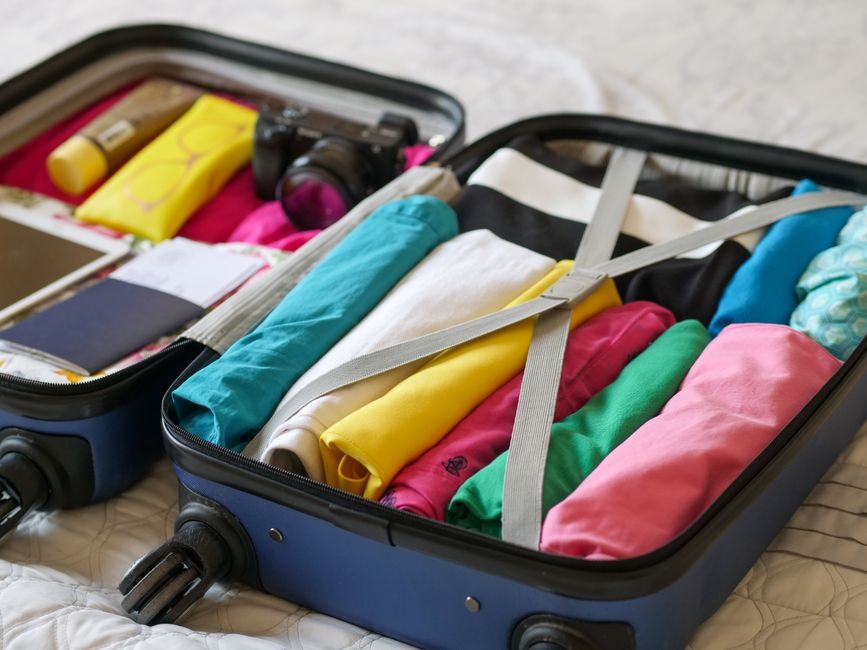
A packing cube is useful not because it magically creates space, but because it defines a limit. If the clothes do not fit comfortably in one small cube, reconsider the pile. Roll or fold according to the fabric; the difference in volume is usually less important than keeping the contents easy to see.
Put underwear and sleepwear along one edge, tops together, and the spare bottom underneath. When you arrive, the cube can go straight into a drawer or on a shelf, which prevents a small hotel room from becoming cluttered with loose clothes.
Keep the “station layer” easy to reach
Trains can move between warm carriages, cool platforms, and rainy streets within a single journey. Keep a light layer, compact umbrella, or scarf near the top of the bag rather than underneath everything else. The same applies to headphones, water, a charger, and any ticket or identification you may need en route.
A small zip pouch can hold the travel essentials so they move as one unit. This makes security checks, seat changes, and quick departures much calmer.
Make toiletries boring and predictable
Short trips do not need a miniature version of the entire bathroom cabinet. Decant only what you will actually use, keep the kit permanently stocked if you travel often, and replace items after returning home. A small wash bag with the same basics each time removes one of the most repetitive parts of packing.
If the accommodation provides soap and shampoo you are happy to use, let it. The same principle applies to hair tools, large cosmetics bags, and just-in-case products: bring them only when they are part of your normal routine, not because travel makes them suddenly seem necessary.
Leave a little empty space
A bag packed to absolute capacity is inconvenient from the first morning. Clothes are harder to repack, a damp umbrella has nowhere to go, and even a small purchase becomes a problem. Aim to leave a hand’s width of space or one loose outer pocket.
That empty space is not wasted. It is what allows the bag to stay easy for the whole trip. By the return journey, you can add a book, a bakery parcel, or a small souvenir without carrying an extra tote through the station.
For a two-night rail escape, light packing is less about discipline than design. Wear the bulkiest pieces, choose clothes that repeat well, give everything a clear place, and stop before the bag is full. The reward is simple: when the train arrives, you can pick up your bag and go.