The Saturday Market Supper: Let the Stalls Choose the Menu
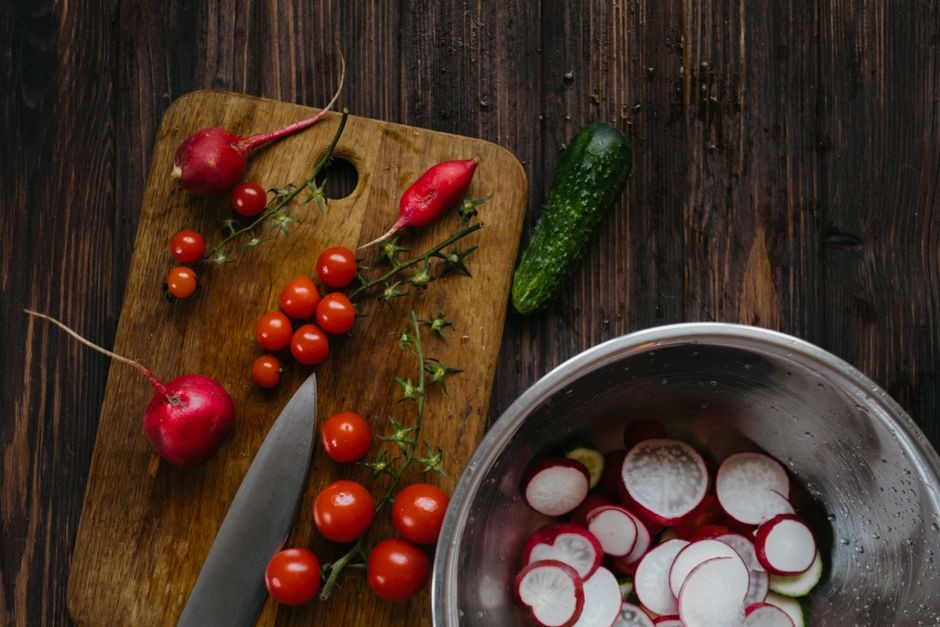
A Saturday market is one of the easiest places to make dinner feel spontaneous without making it complicated. The trick is to arrive with a loose structure rather than a strict shopping list. Instead of hunting for six exact ingredients, look for one excellent vegetable, one supporting ingredient, something sharp or salty, and a simple base such as bread, rice, pasta, or potatoes. That small framework leaves enough room for whatever looks best on the day.
This kind of supper is especially useful at the end of a busy week. It gives you the pleasure of choosing food with your eyes and hands, but it does not demand a long recipe or a crowded kitchen. A handful of tomatoes can become the centre of the plate; a bunch of herbs can change the direction of the whole meal; a loaf from the bakery stall can turn a few vegetables into dinner.
Start with the ingredient that looks impossible to ignore
Walk the market once before buying anything. Notice what appears repeatedly and what looks particularly fresh. Perhaps every stall has late-summer tomatoes, or there are small courgettes with their flowers still attached, or piles of crisp radishes and cucumbers. Choose the ingredient that makes you want to cook immediately.
Once you have that anchor, the rest of the meal becomes easier. Tomatoes suggest basil, soft cheese, toasted bread, beans, or eggs. Mushrooms might lead toward butter, thyme, potatoes, and a green salad. Sweet peppers work well with rice, chickpeas, yoghurt, or grilled bread. You do not need to decide on a named dish; you only need enough complementary pieces to make the plate feel complete.
Build contrast rather than complexity
A satisfying supper often needs fewer ingredients than expected. What matters is contrast. If the main ingredient is sweet, add acidity. If the plate is soft, include something crisp. If everything is mild, add a salty accent. A lemon, a small jar of olives, a wedge of cheese, toasted seeds, or a sharp dressing can provide the final note.
This is also a good reason to keep a few dependable pantry items at home. Olive oil, vinegar, mustard, dried grains, tins of beans, nuts, and spices make market shopping more flexible because the market does not have to supply every component. You can spend your attention on fresh produce and let the cupboard handle the background work.
Cook with one pan and one board
When the ingredients are good, minimal cooking is often enough. Roast sliced vegetables on one tray, soften onions in a pan, or char greens briefly and finish them with lemon. Raw elements can sit alongside cooked ones: sliced tomatoes next to warm potatoes, a cucumber salad beside roasted peppers, or herbs scattered over beans.
Keeping the equipment simple changes the mood of the evening. You can cook while talking, listening to music, or setting the table rather than managing several timers. A wooden board can become a serving surface for bread, cheese, herbs, and sliced vegetables, while the warm element goes straight from pan to plate.
Make room for imperfection
Market produce is rarely as uniform as supermarket produce, and that is part of the pleasure. A misshapen tomato may be the ripest one in the bag. Small carrots can roast whole. Herbs with long stems can be chopped together rather than picked leaf by leaf. Cooking this way encourages attention instead of precision.
If a planned idea does not quite work, change the format. Vegetables that become softer than expected can be folded into pasta or spooned onto toast. A dressing that is too sharp can be softened with yoghurt or olive oil. Leftover roasted produce can become tomorrow’s lunch with grains or eggs.
A simple market-supper formula
For a meal that serves two or three people, start with one generous pile of seasonal vegetables. Add a base such as bread, potatoes, rice, or beans. Include one creamy or salty element if you like—cheese, yoghurt, olives, or a tahini dressing—and finish with herbs or something crunchy. That is enough structure to make the meal feel intentional without turning it into a project.
The best part is that the formula changes naturally with the seasons. Spring might bring peas and herbs, summer tomatoes and cucumbers, autumn squash and mushrooms, winter roots and sturdy greens. The habit stays the same while the ingredients keep the meal fresh.
A market supper is not really about shopping more. It is about noticing more: what is abundant, what smells good, what has just come into season, and what you genuinely feel like eating. When dinner begins with that kind of attention, a few simple ingredients can feel like a small event.